Bursa Dental Calculus Cleaning (Scaling): The Cornerstone of Your Oral Health
Brushing your teeth and using dental floss are the two most important and indisputable steps of individual oral hygiene. However, even with the most meticulous at-home care routines, it is not always possible to completely prevent plaque buildup in certain areas of the mouth. These plaques, which harden by combining with minerals in saliva, eventually take on the form of "dental calculus" (tartar). Clinics providing services in the field of Bursa dental calculus cleaning aim to prevent gum disease by professionally removing these hard deposits that individuals cannot remove on their own. In this article, what tartar is, why it forms, its effects on oral health, and how the professional cleaning process works are examined in detail.
What Is Dental Calculus (Tartar) and How Does It Form?
Our mouth is a complex ecosystem that hosts hundreds of different bacterial species. When we eat, especially when consuming foods containing carbohydrates and sugar, these bacteria combine with food debris to form a sticky, colorless biofilm layer called "microbial dental plaque" on the teeth.
This plaque layer is relatively soft within the first 24 to 48 hours and can be removed from the tooth surface with proper brushing and flossing techniques. However, if plaque remains on the tooth surface, minerals such as calcium and phosphate, naturally present in our saliva, begin to precipitate into this plaque. As a result of this mineralization process, the plaque hardens and "calculus" or, in common usage, "dental calculus" appears.
Dental calculus has a spongy and rough structure. This rough surface acts almost like a perfect scaffold for new bacterial plaque to adhere to and accumulate. In other words, as dental calculus forms, more plaque accumulates on it; as more plaque accumulates, the calculus grows further. This vicious cycle is the main trigger for gum disease. Hardened dental calculus cannot be removed at home with a toothbrush or dental floss; it requires intervention by a dentist.
What Are the Harms of Dental Calculus to Oral and Dental Health?
The presence of dental calculus is more than just an aesthetic issue; it is a condition that directly threatens the health of the tissues inside the mouth. The accumulation of calculus at or below the gum line triggers a series of chain reactions:
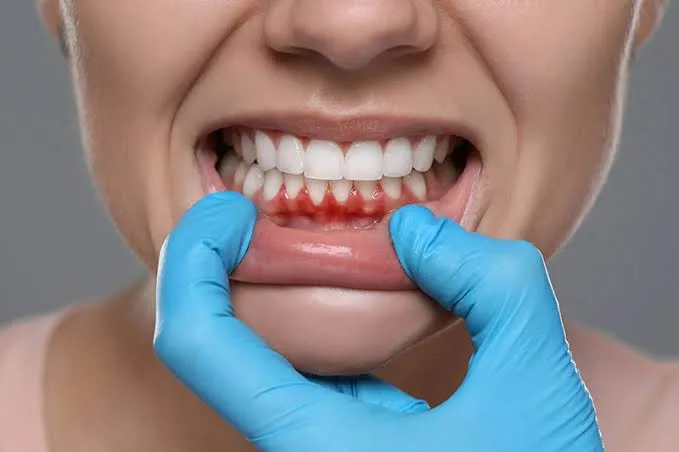
Gingivitis: Toxins produced by the bacteria on dental calculus irritate the gums. As a result, the gums become red, swollen, and prone to bleeding. Bleeding seen while brushing is the most obvious sign of gingivitis.
Periodontitis (Gum and Bone Destruction): Dental calculus that is not treated at the gingivitis stage gradually progresses below the gum line over time. Inflammation spreads from the gums to the jawbone and the periodontal ligaments supporting the teeth. This leads to the formation of spaces called "periodontal pockets," where bacteria can settle even deeper, and eventually causes bone loss in the jaw (periodontitis). Teeth that lose bone support begin to loosen.
Bad Breath (Halitosis): Bacteria accumulating in the porous structure of dental calculus produce sulfur-containing gases. These gases cause chronic and persistent bad breath that does not go away with brushing or mouthwash.
Aesthetic Deterioration: Especially under the influence of tea, coffee, cigarettes, and certain food colorings, dental calculus may turn yellow, brown, or black. This seriously affects the aesthetics of the smile.
How Is Professional Dental Calculus Cleaning (Scaling) Performed?
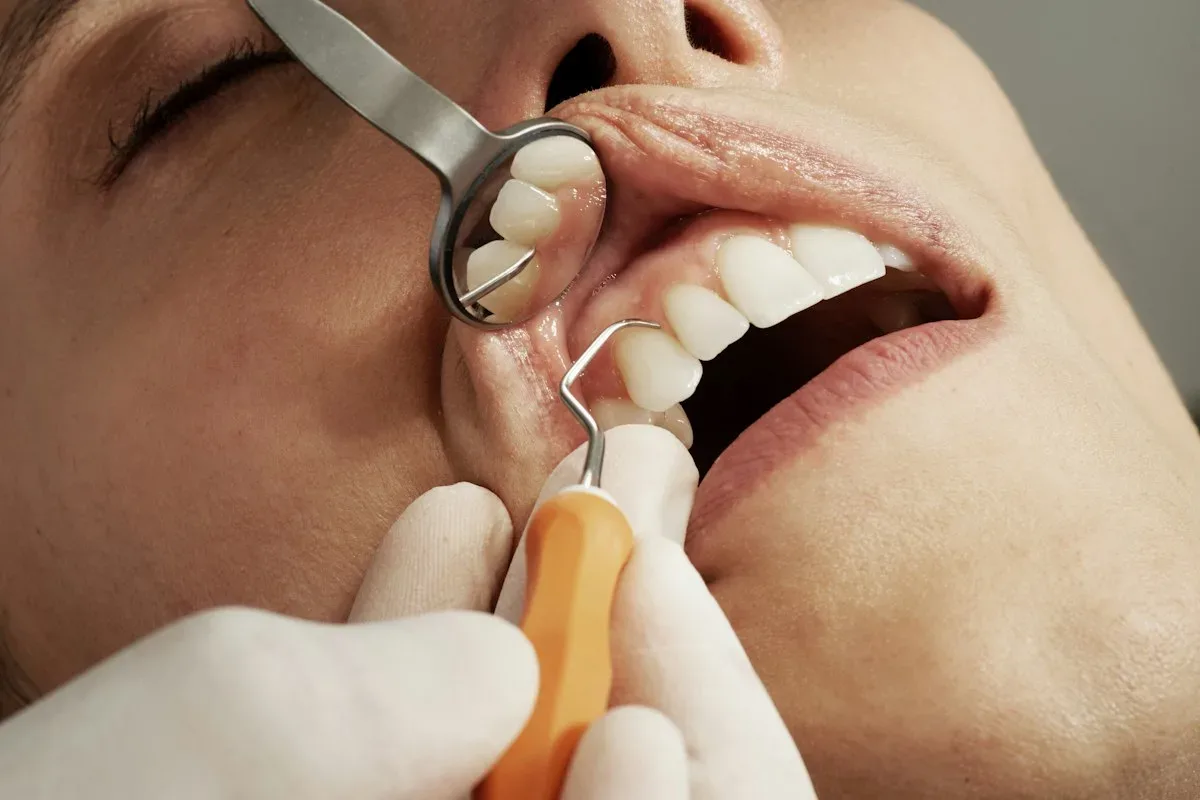
Bursa dental calculus cleaning procedures are performed without damaging the enamel, using the integrated use of ultrasonic devices and hand instruments. Dental calculus cleaning is not a process of removing or abrading any tissue from the tooth itself; it is entirely the removal of deposits added from the outside from the tooth surface. The process generally consists of the following stages:
1. Examination and Evaluation
Before the procedure, the dentist evaluates the amount of plaque and calculus in the mouth, the bleeding status of the gums, and the presence of periodontal pockets. The patient's medical history is reviewed.
2. Cleaning with Ultrasonic Devices
In the main stage of the cleaning process, ultrasonic devices (cavitron) that emit high-frequency vibrations and also spray water are used. While these vibrations cause the dental calculus to break away from the tooth surface, the water spray both reduces the heat generated and removes the fragmented calculus and bacteria from the area. Ultrasonic devices effectively clean large calculus masses without creating any scratches on the enamel.
3. Fine Workmanship: Cleaning with Hand Instruments (Scalers and Curettes)
After ultrasonic cleaning, smaller and more stubborn calculus remnants that remain between the teeth and just below the gum line, where the devices cannot reach, are carefully removed using specially designed hand instruments. This stage is critical for making the tooth surface completely smooth.
4. Polishing Procedure
After all hard deposits are removed, polishing is performed to eliminate discoloration caused by tea, coffee, or cigarettes on the tooth surface and to make the surface smoother. The teeth are polished using a special brush or rubber cup and a non-abrasive paste. A smooth tooth surface makes new plaque accumulation physically more difficult.
Common Misconceptions About Dental Calculus Cleaning
Dental calculus cleaning is a procedure surrounded by some unfounded beliefs in society. These गलत perceptions may cause patients to avoid the necessary treatment:
Wrong: "Dental calculus cleaning scratches the enamel and harms the teeth."
Correct: Ultrasonic devices used in scaling do not work by abrading the tooth, but only by breaking the deposits apart with vibrations. Cleaning performed with the correct technique definitely does not damage the enamel; on the contrary, it protects the tooth's health.
Wrong: "If I have my dental calculus cleaned once, even more calculus will form faster afterward."
Correct: The cleaning process does not speed up calculus formation. The rate of calculus formation is related to saliva composition, dietary habits, and brushing effectiveness. In a cleaned mouth, with proper brushing, calculus formation can be significantly delayed.
Wrong: "After my dental calculus was cleaned, my teeth started to loosen; the cleaning weakened my teeth."
Correct: Dental calculus surrounds the eroded bone tissue, almost like plaster or concrete, binding the teeth together and masking looseness. When the cleaning is done and these deposits are removed, the real picture (loosening due to bone loss) becomes apparent. While untreated calculus will definitely lead to the loss of that tooth, after cleaning, bone loss is halted and the tooth's lifespan is extended.
Wrong: "My teeth were very sensitive after the cleaning, so my teeth must have been damaged."
Correct: Dental calculus covers the root surfaces, creating an insulating barrier against cold/hot stimuli. When the calculus is removed, the exposed root surfaces may develop temporary sensitivity to stimuli. This is completely normal physiological process and usually goes away on its own within a few days.
How Often Should Dental Calculus Cleaning Be Done?
The rate of dental calculus buildup varies from person to person. In some individuals, calculus forms very quickly due to the high mineral content in saliva, while in others this process is slower. The general medical approach is to have routine dental check-ups 6 months apart and, if necessary according to the dentist's clinical judgment during these check-ups, to repeat the cleaning procedure. Especially in those undergoing orthodontic treatment (braces treatment), individuals with diabetes, and smokers, plaque accumulation may be higher, so the frequency of check-ups may be shorter.
Conclusion
Dental calculus is the main cause of serious problems that threaten oral and dental health, ranging from gum bleeding to tooth loss. The up-to-date scaling methods applied in the field of Bursa dental calculus cleaning are among the most basic, most protective, and most effective procedures in dental practice. Regular check-ups every six months and professional cleaning complement at-home oral care and are the most important assurance for keeping teeth and gums healthy for life.

Doka Klinik Dental Team
This article is for information only; please consult our dentists for a treatment plan tailored to you.