Bursa Nilüfer Dental Calculus Cleaning: The First Step Toward Healthy Gums and Fresh Breath
Snow-white and healthy-looking teeth are not only a sign of an aesthetic smile, but also of strong overall health. However regularly we care for our mouth each day, an stubborn enemy begins to build up over time in the hidden spots that the toothbrush cannot reach: Dental Calculus (Tartar). Most people think of tartar as just a simple "stain" problem caused by tea, coffee, or smoking. In fact, if left untreated, tartar is the main driver of serious periodontal (gum) destruction, ranging from gum recession to jawbone loss and even the loosening and eventual loss of healthy teeth.
Nilüfer, a district of Bursa known for its healthcare infrastructure and well-equipped dental clinics, also offers patients the most modern and comfortable solutions in preventive dentistry. If you notice bleeding gums while brushing, are bothered by persistent bad breath, and are considering Bursa Nilüfer dental calculus cleaning (medically called detertraj), you are taking the right step for your oral health. In this guide, we will examine in detail how tartar forms scientifically, why it needs to be removed, and the painless cleaning process performed with ultrasonic devices.
What Is Dental Calculus (Tartar) and How Does It Form Scientifically?
The formation of tartar is actually a highly insidious and microbiological process. Just minutes after eating, a transparent, sticky biofilm layer called "bacterial plaque" (dental plaque) forms on our teeth. This layer contains millions of living bacteria and can be easily removed from the mouth by brushing.
However, in areas where brushing is insufficient (especially the back surfaces of the lower front teeth and the cheek side of the upper molars), this soft bacterial plaque combines with the calcium and phosphate minerals in our saliva. Within an average of 24 to 72 hours, this plaque hardens, crystallizes, and effectively turns into stone. This hard structure is called dental calculus (tartar). Once tartar has formed, it can no longer be removed by a toothbrush or dental floss; it can only be removed from the tooth surface by a dentist using special ultrasonic instruments.
What Happens Biologically If Tartar Is Not Removed?
Because tartar has a rough and porous structure, it provides the perfect surface for new bacteria to attach and multiply. Over time, these bacteria begin to release toxins (poisons) and trigger the following destructive processes in the mouth:
Gingivitis (Gum Inflammation): Bacterial toxins irritate the gums. The gums become red, swollen, and begin to bleed when brushing (and sometimes spontaneously). This is the first and reversible stage of the disease.
Periodontitis (Jawbone Loss): If the tartar is not removed, the infection moves beneath the gums and tears the fibers that attach the tooth to the jawbone. The gums recede downward and the jawbone begins to deteriorate.
Tooth Loss and Halitosis (Bad Breath): Healthy, cavity-free teeth that have lost their bone support begin to loosen and eventually fall out. At the same time, sulfur gases produced by bacteria create chronic bad breath that does not go away with brushing.
Ultrasonic Dental Calculus Cleaning (Detertraj) Process in Bursa Nilüfer
There is a completely unfounded and unscientific urban legend circulating in society that tartar cleaning "scratches the enamel" or "damages the teeth." In fact, the modern "Ultrasonic Detertraj" methods applied in Bursa Nilüfer dental calculus cleaning clinics work solely with vibration energy, without any mechanical scraping of the tooth surface.
Step-by-Step Cleaning Procedure (Cavitron Application)
A routine dental calculus cleaning (detertraj and polishing) procedure, completed without pain or bleeding, usually takes between 20 and 30 minutes and includes the following steps:
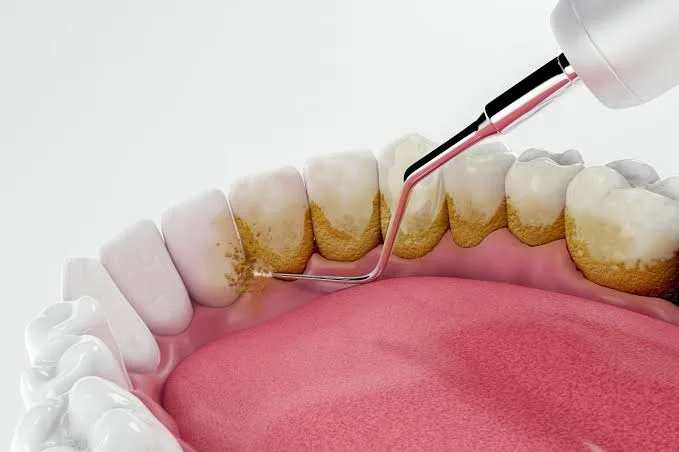
Ultrasonic Cleaning (Cavitron): The dentist uses a special device called a cavitron, which emits microscopic vibrations thousands of times per second. The moment the tip of the device touches the tartar, the ultrasonic vibrations break it apart. At the same time, pressurized water sprayed from the tip both rinses the area and prevents the device from overheating. At this stage, absolutely no part of the tooth enamel (its own tissue) is removed or worn away.
Curettage (When Necessary): If the tartar has moved too far beneath the gums and created deep pockets, the dentist also gently smooths the root surfaces beneath the gums with special hand instruments (curettes).
Polishing (Glazing and Shining): After the tartar is removed, the surface of the teeth remains slightly rough. Using a rotating brush or rubber cup, the dentist applies a special polish (paste), usually containing fluoride or pumice. This procedure makes the tooth surface smooth as glass, significantly delaying the formation of new bacterial plaque and the adherence of tea/coffee stains.
Important Information: In some clinics, in addition to polishing, "Airflow" (Air Flow) technology, which sprays pressurized air, water, and fine bicarbonate powder, is also used to completely eliminate stubborn tea, coffee, and cigarette stains.
Critical Points to Keep in Mind After Cleaning
That feeling of "space" you notice between your teeth immediately after the procedure is completely normal; the thick layer of tartar occupying the spaces between the teeth has been removed. You may also experience temporary sensitivity to hot and cold for a few days. To speed up recovery, you should pay attention to the following steps:
First 2 Hours: Avoid eating or drinking anything (except water) during the first two hours after the procedure.
Staining Foods and Drinks: Especially during the first 24-48 hours, do not let staining (chromogenic) substances such as tea, coffee, tomato paste, wine, or cigarettes come into contact with the tooth surface, whose pores are open.
Oral Hygiene: Before going to bed at night, brush your teeth with a soft or medium-soft toothbrush using a sweeping motion (from the gums toward the teeth) and обязательно start using dental floss.
Common Misconceptions About Dental Calculus Cleaning
The most common myths encountered in dental clinics are generally based on hearsay. Here are those myths disproven in the light of science:
Hearsay Myth (False) | Scientific Fact (True) |
"If I get cleaning done, my enamel will be scratched and thinned." | Modern ultrasonic devices do not scrape the tooth; they only break up tartar with vibration. They do not harm the enamel. |
"My teeth started to loosen after the cleaning." | What actually loosens the teeth is tartar, which erodes the bone. Once the tartar is removed, the eroded bone becomes visible; the problem is not the cleaning, but that it was done too late. |
"If I have it cleaned once, I'll need to keep getting it cleaned; it becomes a habit." | Whether it is cleaned or not, your saliva composition is the same and tartar forms. In any case, dental calculus should be cleaned routinely every 6 months. |
"My teeth gaps opened up and spaces formed." | Those spaces had already formed as a result of bone loss, but you could not see them because they were filled with tartar. |
In Conclusion; Bleeding gums and persistent bad breath are your body’s "help" signal. The detertraj procedure performed in Bursa Nilüfer dental calculus cleaning clinics in as little as half an hour, painlessly and comfortably, is the strongest preventer of much more costly and painful treatments that may come later (implants, tooth extractions, gum surgeries). A white, fresh, and healthy smile begins with proper and regular dental care.

Doka Klinik Dental Team
This article is for information only; please consult our dentists for a treatment plan tailored to you.