Bursa Occlusal Splint: A Scientific Approach to TMJ and Teeth Grinding Disorders
The chewing system is a delicate biomechanical balance made up of the teeth, jawbones, chewing muscles, and complex structures called the temporomandibular joint (TMJ - jaw joint). This balance can be disrupted by stress-related teeth grinding (bruxism), old fillings or dentures made improperly, orthodontic bite disorders, or trauma to the jaw area. This mismatch in the system manifests over time as jaw joint pain, sounds coming from in front of the ear while eating, severe morning head and neck pain, and irreversible wear on tooth surfaces.
Occlusal splints, often confused in the community with a simple "night guard," are actually medical orthopedic devices produced with millimetric biomechanical calculations and used in the treatment of jaw joint disorders (TMD) and severe muscle spasms. The Bursa occlusal splint treatments applied in Bursa's clinics equipped with advanced technology and expert teams eliminate the destructive pressure on the joint by reorganizing the bite relationship between the lower and upper jaws. In this comprehensive clinical guide, we will examine the biological mechanism of occlusal splints, how they differ from simple night guards, and all the medical details of Bursa occlusal splint treatment protocols.
What Is an Occlusal Splint and How Does It Differ from Simple Night Guards?
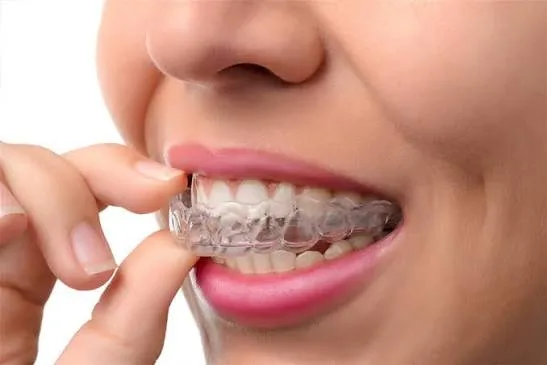
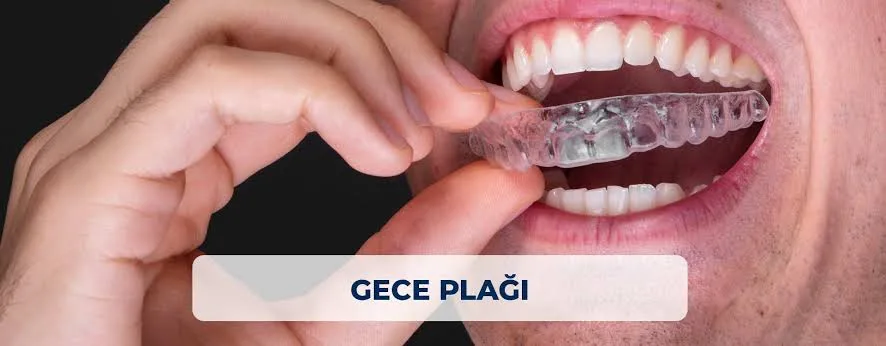
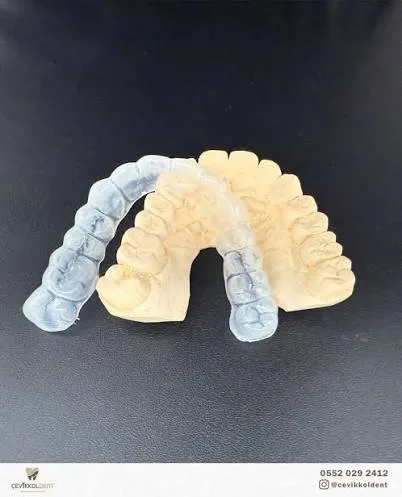
An occlusal splint is a removable treatment appliance custom-made, usually from hard and transparent acrylic material, that covers the chewing (occlusal) surfaces of the lower or upper jaw teeth. Its main purpose is not only to protect the teeth from rubbing against each other, but also to guide the lower jaw and jaw joint into the healthiest anatomical resting position (centric relation).
Biomechanical Effect on the Jaw Joint (TMJ) and Muscle Spasms
Under normal conditions, our lower and upper teeth only contact each other for a total of 15-20 minutes a day during swallowing and chewing. However, in individuals with bite disorders or a habit of clenching, the chewing muscles (masseter, temporal, and pterygoid muscles) contract continuously for hours. This leads to lactic acid buildup in the muscles, severe spasms, and forward displacement of the joint disc from its socket (disc displacement).
A properly planned Bursa occlusal splint application places an ideally thick barrier between the lower and upper teeth, allowing the chewing muscles to lengthen and relax. Compression between the joint head (condyle) and the joint socket is reduced, intra-articular pressure decreases, and an environment suitable for the biological healing of inflamed tissues is created.
Why Choose an Occlusal Splint Instead of Standard Guards?
Ready-made guards sold in pharmacies or thin, soft silicone protectors produced without bite analysis can only provide limited protection against mechanical friction on tooth enamel. However, in a patient with jaw joint problems, using a soft guard may increase the tendency to chew on the guard during the night (as if chewing gum), which can intensify muscle pain even more. In contrast, in the Bursa occlusal splint treatment applied under specialist supervision, the chewing surface of the guard is balanced millimeter by millimeter with each tooth in the opposing jaw, and special guidance paths are created that protect the joint during the lower jaw's side-to-side movements.
Bursa Occlusal Splint Types and Clinical Uses
Different designs of occlusal splints are used according to the patient's diagnosis (muscle-related pain, joint disc displacement, severe bruxism, or sleep apnea). In a qualified Bursa occlusal splint center, the most appropriate splint type for the case is determined after a detailed clinical and radiographic examination.
Stabilization Splint (Michigan Splint)
It is the most common splint type and is considered the gold standard in dental literature. It is usually applied to the upper jaw and covers all teeth. It has a flat chewing surface and allows the lower jaw teeth to move freely over this surface without encountering any obstacles. It offers high clinical success especially in the treatment of severe teeth grinding (bruxism), chewing muscle fatigue, and tension-type headaches that occur in the morning.
Anterior Repositioning Splint
It is preferred in cases where the cartilaginous disc in the jaw joint has slipped out of place and there is a "click" sound when opening and closing the mouth, along with jaw catching or locking. This splint aims to slightly position the lower jaw forward so that the joint head (condyle) can recapture the displaced disc and the joint tissues can heal through remodeling.
In the table below, you can review the clinical differences between occlusal splint types and standard guards:
Appliance Type | Material and Design | Main Clinical Goal | Ideal Use |
Stabilization (Michigan) Splint | Hard medical acrylic, flat occlusal surface | Relieves muscle spasms, places the jaw in a resting position. | Severe bruxism, muscle-related facial and head pain |
Anterior Repositioning Splint | Hard acrylic, ramp that guides the lower jaw forward | Repositions the displaced joint disc, reduces pressure. | Clicking sounds from the jaw joint and jaw locking |
Soft Protective Guard | Flexible thermoplastic / silicone | Protects tooth enamel and porcelain veneers from friction. | Mild tooth grinding without joint problems |
Ready-made (Standard) Guards | Generic molded plastic | Disrupts bite balance, may increase joint damage. | Not recommended in clinical dentistry |
Digital Planning and Occlusal Splint Treatment Process
Current Bursa occlusal splint protocols use computer-aided digital dentistry systems that eliminate the margin of error of traditional impression methods.
3D Digital Scanning and Bite Registration
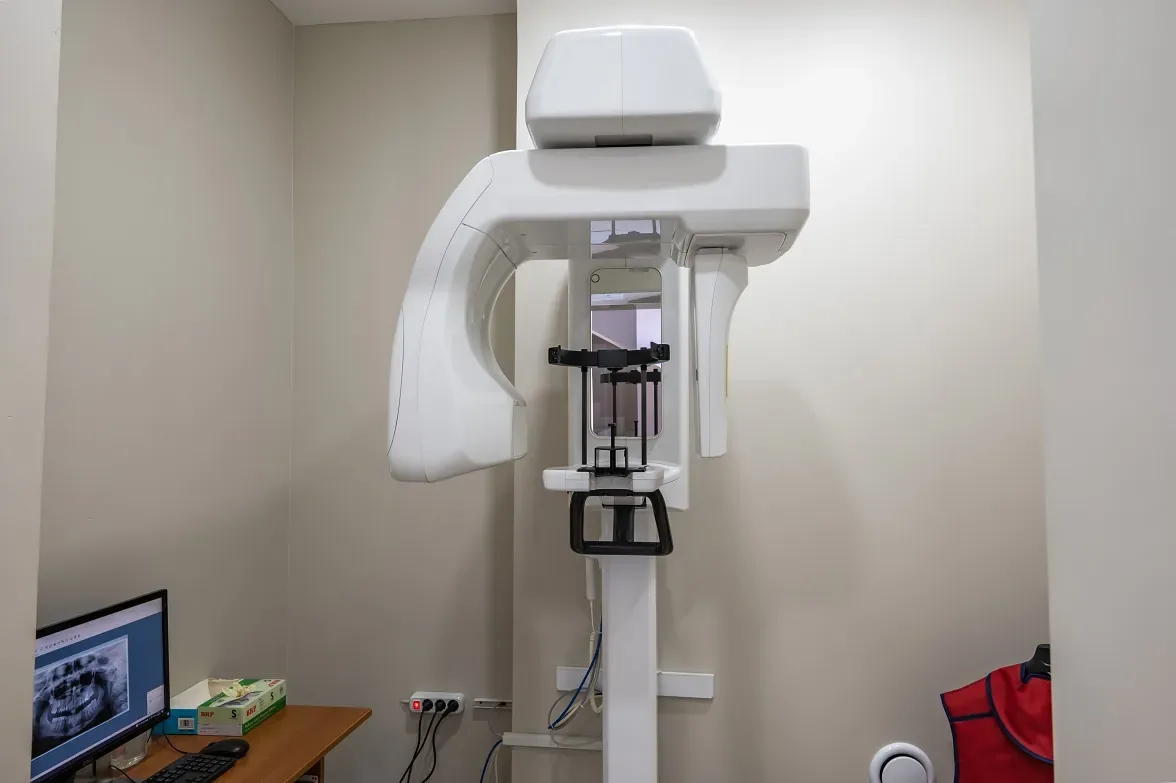
The treatment process begins with the doctor's detailed examination of the jaw muscles and joint area. In cases deemed necessary, 3D Dental Tomography (CBCT) or Magnetic Resonance (MR) imaging may be requested to evaluate the joint bones and disc position. Then, using intraoral optical scanners (3D Intraoral Scanner), digital models of the lower and upper jaws are created within seconds and the patient's bite relationship is recorded. The splint, modeled in digital design software according to joint angles, is produced from biocompatible hard resin blocks using 3D printers or high-precision CAD/CAM milling machines.
Adjustment (Grinding) and Periodic Follow-Up Sessions
The success of occlusal splint treatment depends not so much on the fabrication of the guard, but on the precise "occlusal adjustment" performed in the patient's mouth. The doctor uses special articulating paper to ensure that all lower teeth contact the splint at the same time and with equal force.
The main rules patients should follow during treatment are as follows:
Regular Use: The splint should generally be worn regularly every night while sleeping (and in some acute joint cases, during the day as well), according to the protocol determined by the doctor.
Check-Up Appointments: As the muscles relax, the lower jaw's bite position changes. Therefore, in Bursa occlusal splint treatment, it is essential to attend the 1st week, 1st month, and 3rd month check-ups so that the contact points on the splint surface can be rebalanced.
Hygiene and Care: After each use, the splint should be cleaned with cold or lukewarm water using a soft brush; it should not be exposed to hot water and should be stored in its perforated protective case.
Conclusion: Carry Your Jaw Joint and Teeth Safely into the Future
Sounds coming from the jaw joint, temple pain felt in the morning, or unexplained sensitivity in the teeth are early warning signals from your body against excessive load on the chewing system. Ignoring these symptoms may lead in the coming years to permanent limitations in mouth opening, joint degeneration, and the fracture of healthy teeth.
The Bursa occlusal splint treatment, which rehabilitates the chewing system without the need for surgery, is one of the most reliable and protective orthopedic solutions based on scientific foundations. With an accurate diagnosis, digital measurement technologies, and custom splint treatment under specialist supervision, you can relieve your muscle pain, protect your jaw joint, and wake up to the day with a rested jaw structure.

Doka Klinik Dental Team
This article is for information only; please consult our dentists for a treatment plan tailored to you.