Bursa Removable Dentures: A Guide to Chewing Function, Comfort, and Aesthetic Rehabilitation
Multiple missing teeth or complete edentulism is an important clinical condition that directly affects not only an individual's smile aesthetics, but also their ability to grind food, digestive system health, speech clarity, and the soft tissue support of the facial skeleton. When missing teeth in the mouth are not compensated for, the remaining adjacent teeth tilt into the gaps, the balance of the jaw bite is disrupted, and volume loss in the jawbone (resorption) accelerates. In addition, the loss of hard tooth support beneath the lip and cheek tissues leads to deep lines around the mouth and a reduction in the vertical dimension of the face.
In cases where surgical implant procedures cannot be performed due to general health status, advanced bone deficiency, or the patient's own preference, removable dentures are the most reliable treatment option for providing oral rehabilitation without the need for surgery. In Bursa's advanced dental clinics, Bursa removable dentures prepared with digital impression systems and the biomechanical planning of specialist prosthodontists provide patients with a comfortable chewing function and a natural facial expression. In this comprehensive clinical guide, we will examine the indications for removable dentures, the types of total, framework, and precision attachment (snap-on) dentures, and all the medical details of Bursa removable dentures care protocols.
What Is a Removable Denture and In What Situations Is It Preferred?
Removable dentures are custom-made prosthetic restorations that replace missing teeth and lost gum tissue inside the mouth and can be easily inserted and removed by the patient after meals and while sleeping at night. Unlike fixed bridge prostheses, they receive support not only from the existing teeth, but also from the gum tissue on the jawbone (mucosa) or from a small number of implants placed.
Their Effects on Chewing Efficiency, Phonetics, and Facial Support
A well-planned Bursa removable dentures application rebuilds the biomechanical integrity of the chewing system in three key areas:
Nutrition and Digestive Health: Mechanically breaking down food in the mouth before it is sent to the stomach is the first and most critical step of digestion. Gastric problems such as gastritis and reflux are common in individuals who have to swallow food because of missing teeth. Removable dentures recreate chewing surfaces and enable balanced nutrition.
Speech Clarity (Phonetics): Without the coordinated contact of the tongue, lips, and teeth, it is not possible to pronounce consonants such as "S, F, V, T, D" correctly. The millimetric placement of denture teeth according to the position of the lips and tongue eliminates whistling sounds and lisps in speech.
Vertical Dimension and Aesthetic Facial Support: With tooth loss, the distance between the tip of the nose and the chin shortens, and sagging occurs in the cheeks. The denture's pink acrylic base and tooth arrangement support the lip and cheek muscles from within, giving the face a more lively and natural proportion.
Clinical Solutions in Cases Where Fixed Prostheses or Implants Cannot Be Applied
Not every patient may be a suitable candidate for a fixed bridge or full-arch implant surgery. In individuals with uncontrolled systemic conditions, advanced age, or insufficient bone volume who avoid extensive bone grafting procedures, Bursa removable dentures offer a surgical-risk-free, economical, and predictable treatment alternative. In addition, for patients who have extensive tissue loss in the jawbone after major cyst surgery or trauma, removable dentures are again the method that most aesthetically compensates for the lost gum volume with a pink acrylic structure.
Bursa Removable Dentures: Main Types of Dentures and Their Features
There is no single denture design in prosthodontic treatment. Depending on the number of healthy teeth remaining in the mouth, the height of the jawbone, and the patient's aesthetic expectations, different systems are applied in a qualified Bursa removable dentures clinic.
Total Dentures and Implant-Supported (Overdenture) Systems
Total Dentures: These are dentures, commonly known as "plate dentures," used when there are no natural teeth left in the lower or upper jaw. In the upper jaw, they adhere by vacuum effect using the large surface area of the palatal vault. In the lower jaw, the retention area is narrower due to tongue movements and salivary gland ducts; therefore, adapting to lower total dentures requires a little more patience compared with the upper jaw.
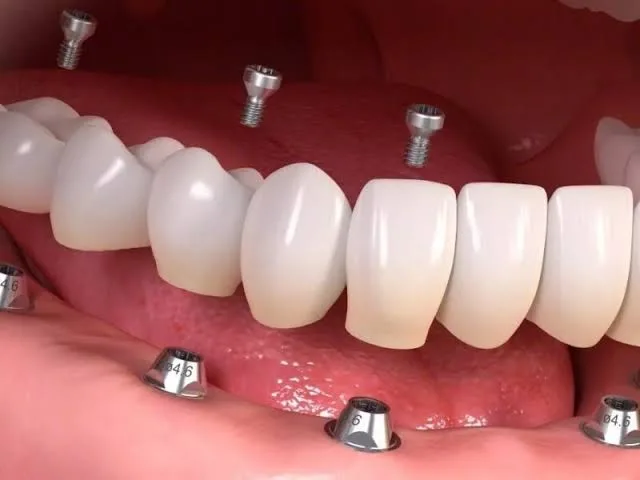
Implant-Supported Removable Dentures (Overdenture): This is an advanced solution developed especially for patients whose lower jawbone has resorbed excessively and who complain that their full denture moves while speaking or eating. Special attachment parts called "locator" (snap-on) or "bar" are placed on 2 or 4 titanium implants inserted into the jawbone. The denture locks onto these parts; thus, the denture is completely prevented from dislodging while eating, and the patient can remove it whenever they wish for cleaning.
Partial Framework Dentures and Precision Attachment (Snap-On) Dentures
In cases of partial edentulism where there are some healthy teeth in the mouth but the gaps are too long to be restored with a fixed bridge, two main options stand out:
Classic Partial (Hooked / Clasped) Dentures: These are dentures in which the acrylic body that replaces the missing teeth is held to the existing natural teeth with metal hooks (clasps) through a thin and durable metal framework. They are economical and durable; however, the metal hooks placed on the front teeth may be visible from the outside while smiling.
Precision Attachment (Sliding / Snap-On) Dentures: This is an advanced denture design that eliminates the aesthetic disadvantage of clasped dentures. In this system, aesthetic zirconia or porcelain crowns are placed on the natural teeth adjacent to the missing tooth gap, and hidden sockets (precision attachments) are placed on the back/inner surfaces of these crowns. The counterpart parts inside the denture lock into these sockets with a snap-on mechanism. From the outside, no metal hook is visible, and the retention is extremely high.
In the table below, you can review the clinical comparison of the main denture types used within the scope of Bursa removable dentures:
Denture Type | Retention Mechanism | Aesthetics and Appearance | Chewing Stability | Ideal Use Case |
Total Denture | Supported by gum tissue and palatal vacuum. | Offers the appearance of natural teeth and gums. | Medium (Requires adaptation in the lower jaw). | Patients with no teeth who do not want implants |
Implant-Supported Overdenture | Locks onto 2-4 implants in the jaw with snap-on/bar attachments. | Very High (The palatal part can be reduced). | Excellent (Does not move or cause sore spots). | Those seeking high retention in complete edentulism |
Partial (Clasped) Denture | Attaches to existing teeth with metal hooks (clasps). | Medium (The hooks may be visible on front teeth). | High (Supported by teeth and tissue). | Those with partial tooth loss looking for a practical solution |
Precision Attachment Denture | Locks into hidden sockets inside the crowns. | Excellent (No metal hook appearance). | Very High (Provides tight and balanced retention). | Those who want high-level aesthetics in partial tooth loss |
Digital Impression, Adaptation Process, and Denture Care Protocols
In current Bursa removable dentures applications, precise functional impression techniques and 3D digital scanners that minimize traditional impression errors are used.
Clinical Application Stages and Bite (Occlusion) Balance
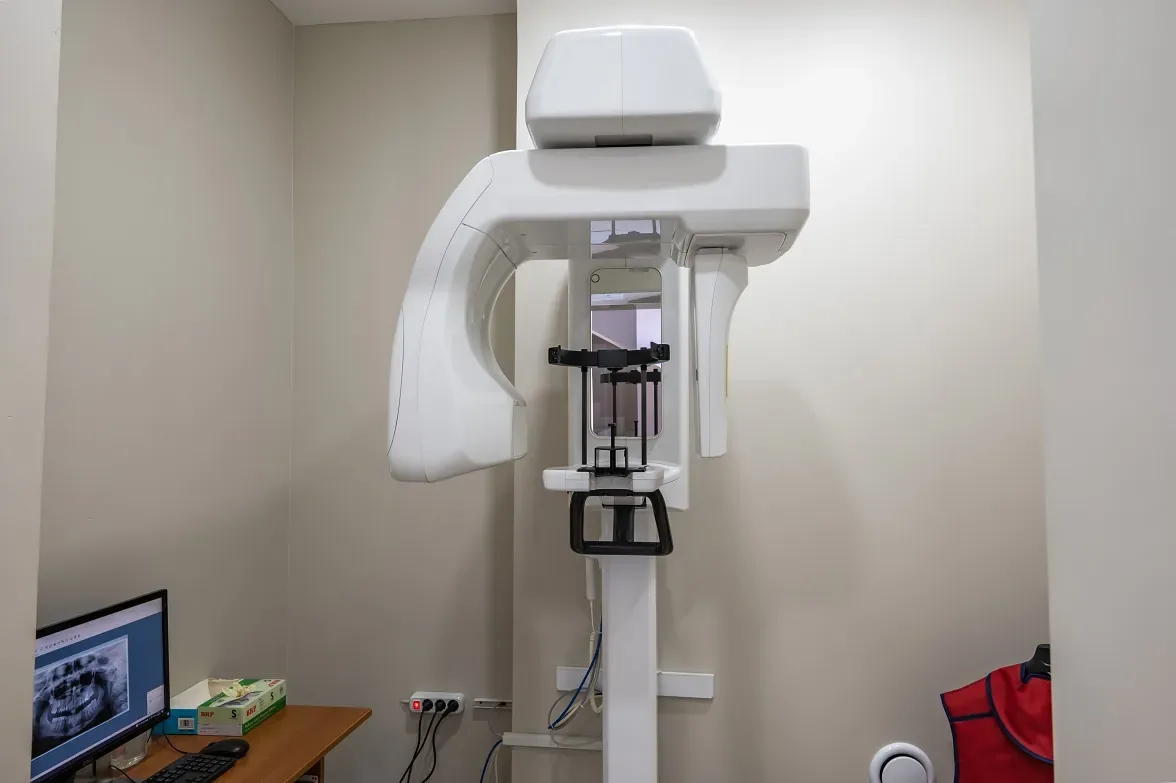
Examination and Impression Stage: The doctor evaluates the structure of the jawbones, the thickness of the mucosa, and the condition of any existing teeth radiographically. After the initial impressions, custom trays are prepared and precise secondary impressions that record jaw movements are taken.
Vertical Dimension and Bite Registration: The occlusal relationship between the lower and upper jaw and the facial height are determined millimetrically.
Teeth Try-In Stage: The denture teeth are arranged on a wax base and tried in the patient's mouth. In this session, the patient looks in the mirror and evaluates the color, size, and smile aesthetics of the teeth together with the doctor; speech sounds are checked.
Delivery and Adjustment: The denture, whose acrylic and framework finishing has been completed in the laboratory, is delivered to the patient. If there are pressure points on the soft tissues in the first days, the denture is made completely comfortable through millimetric adjustments performed during follow-up sessions.
Adaptation to New Dentures and Daily Hygiene Rules
For the denture to fully adapt to the oral tissues, an average 2 to 4 weeks of adjustment is required. For healthy use and longevity, patients are advised to pay attention to the following rules:
In the first days, increased saliva production and the feeling that the denture is a foreign object in the mouth are completely normal; reading a book out loud helps the tongue quickly get used to the new denture.
While eating, bites should be broken into small pieces and chewing should be done on both the right and left sides at the same time (bilateral) to prevent the denture from tipping over.
Dentures should be removed after each meal and cleaned under running water with a soft denture brush and liquid soap. Abrasive toothpastes scratch the denture surface and lead to bacterial accumulation; boiling water and bleach, on the other hand, damage the structure of the denture.
To allow the blood circulation of the gum tissues in the mouth to relax and rest, Bursa removable dentures should be removed while sleeping at night and stored in special containers filled with clean water (with a denture-cleaning tablet added 2-3 times a week).
Over the years, the denture may loosen due to physiological changes in the jawbone. Therefore, a check-up should be done every 6 months, and if necessary, a "relining" procedure should be performed on the denture base.
Conclusion: Proper Planning for Healthy Eating and a Confident Smile
You do not have to stay away from your favorite foods or hesitate to smile in social settings because of missing teeth. Designed with proper bite balance, in harmony with your facial features, and produced with biocompatible materials, Bursa removable dentures are a reliable treatment that helps you regain your chewing function and quality of life.
Do not delay booking an examination appointment at specialist clinics to evaluate total, precision attachment, or implant-supported removable denture options planned individually by expert prosthodontists.

Doka Klinik Dental Team
This article is for information only; please consult our dentists for a treatment plan tailored to you.