Orthodontics
is formed from the combination of two Greek words: “orthos,” meaning straight, and “odontos,” meaning tooth. Orthodontics is the oldest specialty in dentistry, studying the relationship between the teeth and the jawbones.
An orthodontic disorder occurs as a result of incompatibility in the relationship between the teeth and/or the lower and upper jaws. Orthodontic treatment can be applied at any age; however, as with all conditions, early diagnosis and treatment are of great importance in orthodontic disorders as well. While skeletal problems between the lower and upper jaws can be corrected during the growth period with appliances and devices, at later ages these problems can only be corrected with surgical methods. The main goals of orthodontic treatment are;
✓ Correcting chewing function, ✓ Correcting speech function, ✓ Helping to ensure better oral hygiene, ✓ Achieving aesthetics ✓ Providing psychological support by increasing the patient's self-confidence in society.
Orthodontics can also help the patient breathe through the nose by working together with ear, nose, and throat specialists. It also works jointly with plastic surgeons and maxillofacial surgeons in solving skeletal problems in adult patients and in the treatment of babies and children with cleft lip and palate.
At the first encounter with an orthodontic problem or when one is suspected, an orthodontist should be consulted. Children's first visit to an orthodontist should be at the age of 6-7. Also,
✓ Those who breathe through the mouth or have an adenoid problem, ✓ Those who have used a pacifier for a long time, ✓ Those with a thumb-sucking habit, ✓ Those with a cleft lip and palate, ✓ Those who have suffered trauma to the jaw-face region, ✓ If there is a skeletal problem in the lower and upper jaw in the family, ✓ If the upper front teeth are very forward (when children fall, the probability of the front teeth breaking is very high.) ✓ If baby teeth have been extracted at an early age, an orthodontist should definitely be consulted.
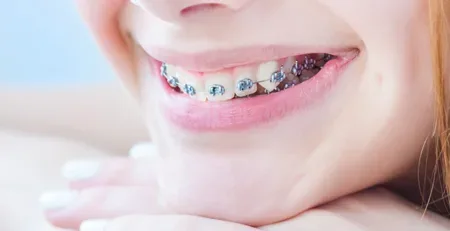
In orthodontic treatment, which is more commonly known as straightening crowded teeth, various treatment techniques are used. Depending on the existing problem; treatments can be performed with extraoral appliances, removable appliances, functional appliances, and fixed appliances. For underdevelopment or overdevelopment of the lower or upper jaw, the devices known as functional appliances, which help the jaws develop in a certain direction, are used during the growth and development period. Fixed appliances, which play a larger role in orthodontic treatment, are made using devices called brackets that are bonded to the teeth and wires. Less complex orthodontic problems can be treated with removable appliances that the patient can put on and take off.
Most orthodontic patients visit clinics with aesthetic concerns caused by the crowding of their teeth, and they also have aesthetic concerns during the orthodontic treatment process. However, with the ongoing development of the materials used today, aesthetic concerns during treatment can be addressed. With tooth-colored aesthetic bracket systems, which have become quite widespread in recent years, the appearance of orthodontic appliances has been minimized. In addition, bracket systems placed on the tongue side of the teeth have completely eliminated the front visibility of the brackets and therefore aesthetic concerns. Mild irregularities in the teeth can also now be corrected with clear aligners, which are becoming increasingly common, and the patient's aesthetic concerns can be eliminated.

Doka Klinik Dental Team
This article is for information only; please consult our dentists for a treatment plan tailored to you.